Different Types of Gorillas
Different types of gorillas are found across East and Central Africa, each with unique physical traits, habitats, and conservation stories.
Gorillas are charming and highly intelligent primates. They belong to the family Hominidae, which also includes humans, chimpanzees, and orangutans. As a result, they rank among the most iconic and sought after animals in wildlife tourism, particularly in East and Central Africa. Gorillas are the world’s largest primates and one of the most fascinating species to encounter in the wild. Overall, scientists divide them into two species.
These include the Eastern Gorilla (Gorilla beringei) and the Western Gorilla (Gorilla gorilla). Together, they form four distinct subspecies. Each subspecies has evolved through its unique habitat, behavior, and conservation story. Therefore, understanding these differences helps travelers appreciate the depth and diversity of Africa’s great apes. In addition, gorilla tourism remains one of East Africa’s strongest high impact travel assets. It delivers exceptional guest experiences while driving conservation and local economic value.
Types of Gorillas: Eastern Gorilla
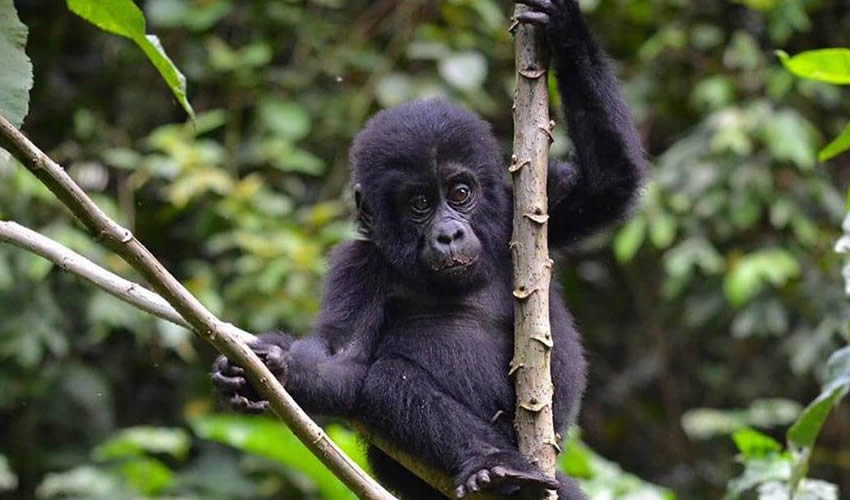
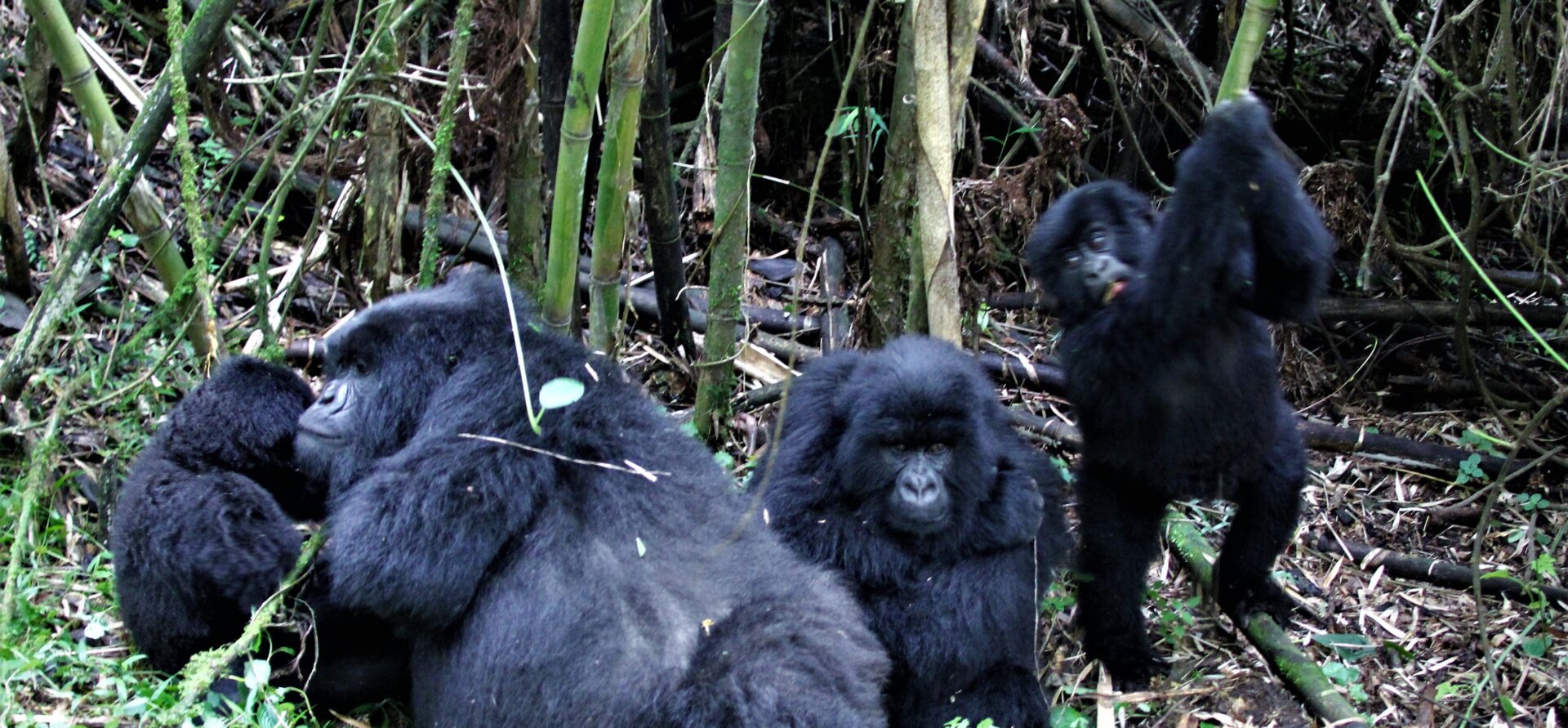
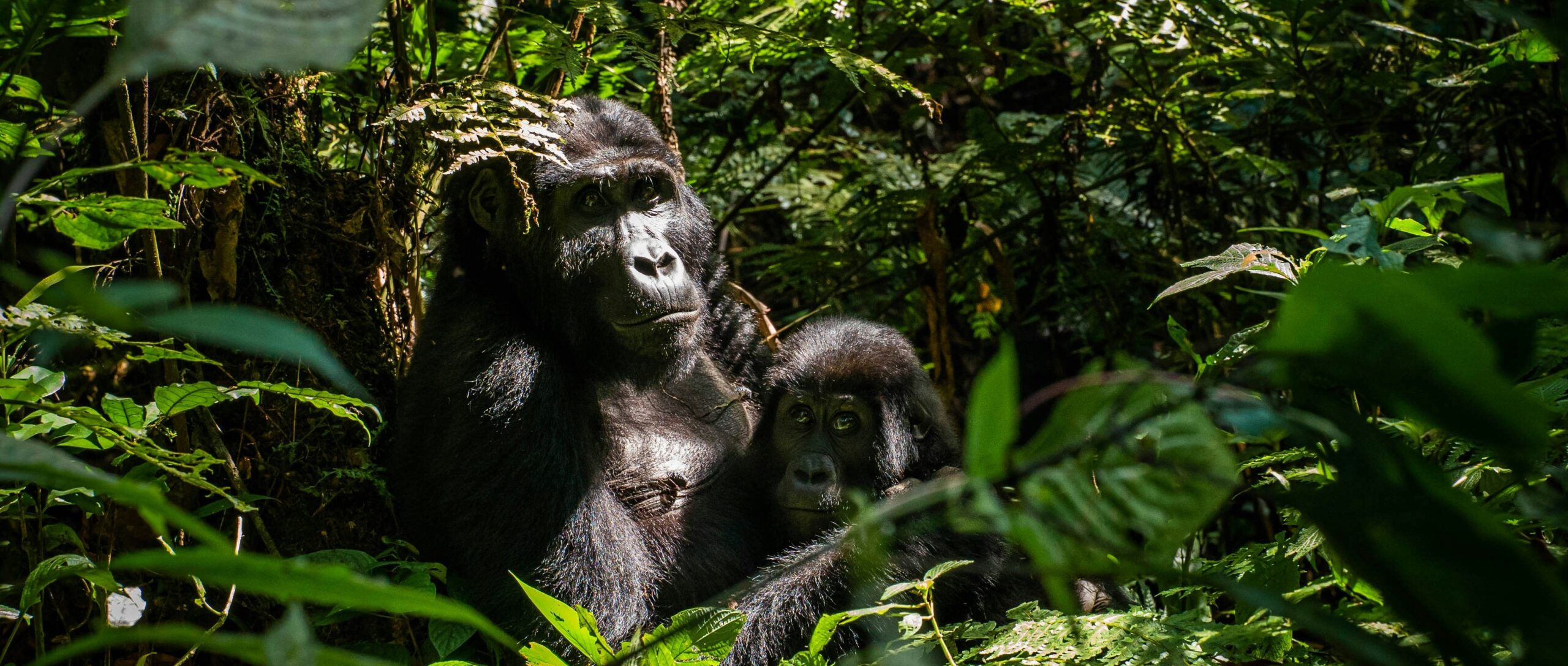
The Eastern Gorilla (Gorilla beringei) has two subspecies: the Mountain Gorilla (Gorilla beringei beringei) and the Eastern Lowland Gorilla (Gorilla beringei graueri). Notably, the Mountain Gorilla has a population of 1,063 and remains the most iconic subspecies. It lives in the Virunga Massif of Rwanda, Uganda, and the Democratic Republic of Congo, as well as Bwindi Impenetrable National Park in Uganda. These gorillas inhabit high-altitude forests reaching up to 4,000 meters. As a result, they developed thick fur, strong family bonds, and a gentle nature. Consequently, they offer unforgettable trekking experiences, especially in Rwanda’s Volcanoes National Park.

The Eastern Lowland Gorilla lives in the Kahuzi-Biega region of the eastern Democratic Republic of Congo and is the largest subspecies. In comparison to other gorillas, they have powerful bodies and shorter fur. Currently, their population is estimated at 3,800 individuals. However, their numbers declined from over 16,000 in the 1990s due to habitat loss, mining, and instability. As a result, accessing these gorillas requires specialist expeditions for tourism.
Types of Gorillas: Western Gorilla
The Western Gorilla (Gorilla gorilla) includes two subspecies: the Western Lowland Gorilla (Gorilla gorilla gorilla) and the Cross River Gorilla (Gorilla gorilla diehli). Among them, the Western Lowland Gorilla is the most widespread and abundant. It inhabits the rainforests of Gabon, Congo, Cameroon, and surrounding areas. Compared to mountain gorillas, these gorillas are smaller and show excellent climbing abilities. For example, many display a distinctive reddish-brown forehead patch. Their population ranges between 300,000 and 360,000 individuals. Nevertheless, sightings remain rare due to their remote habitat, although Odzala and Dzanga-Sangha offer unique viewing opportunities.
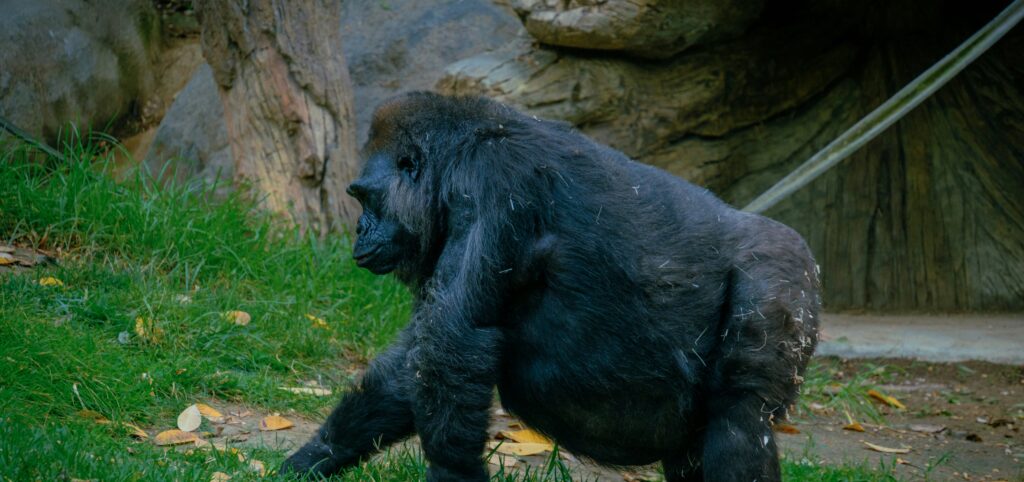
The Cross River Gorilla is the rarest gorilla subspecies, with fewer than 300 individuals remaining along the Nigeria-Cameroon border. Compared to other gorillas, they are smaller and more slender. Additionally, these gorillas actively avoid human contact. Due to their fragile status, conservationists exclude them from mainstream tourism.
Gorilla Trekking in Rwanda
Rwanda is globally renowned for its unforgettable gorilla trekking adventures. In particular, it offers an exclusive opportunity to encounter over 12 habituated gorilla families in Volcanoes National Park. This park lies at the heart of the endangered mountain gorilla’s habitat. As a result, visitors come face to face with these majestic creatures in their natural environment. Overall, this experience ranks among the most thrilling and unique wildlife encounters on the planet. If you wish to witness it yourself, contact us HERE. Our team will gladly help you make it happen.
Frequently Asked Questions About Different Types of Gorillas
How can you easily distinguish various types of gorillas?
A simple rule of thumb for identifying the different types of gorillas is to observe size, fur length, and habitat. For instance, mountain gorillas have thicker, longer fur adapted to cold, high-altitude forests. Eastern lowland gorillas are larger and have shorter fur. Meanwhile, western lowland gorillas are smaller, more agile climbers and often show a brown or reddish patch on the forehead.
What is a quick rule of thumb for telling different types of gorillas apart?
As a general rule, gorillas living in high mountain forests are mountain gorillas. In contrast, gorillas in dense lowland rainforests of Central Africa are western lowland gorillas. Similarly, the largest gorillas found in eastern Congo are eastern lowland gorillas. Therefore, combining habitat and body size makes identifying the different types of gorillas easier than relying on appearance alone.
What differences do the different types of gorillas have besides geography and appearance?
Beyond geography and appearance, the different types of gorillas differ in diet, social behavior, and movement patterns. For example, mountain gorillas feed mostly on leaves and stems. Western lowland gorillas, however, consume more fruit. In addition, western gorillas climb trees more often, while mountain gorillas spend most of their time on the ground due to their size and habitat.
Which gorillas are available for tourism?
Currently, tourism mainly focuses on mountain gorillas and, in limited cases, western lowland gorillas. For this reason, mountain gorilla trekking is well established in Rwanda and Uganda. Other different types of gorillas, such as eastern lowland and Cross River gorillas, remain rarely visited due to conservation sensitivity and remote habitats.