
Uganda is a destination where a safari can mean very different things from one day to the next. You can be watching elephants and lions in Queen Elizabeth National Park, walking through the Kibale in search of chimpanzees, enjoying a boat trip in Murchison Falls, or trekking through the forests of Bwindi to meet mountain gorillas. Uganda without a doubt has everything. It is particularly well suited to travelers who want more than a just traditional big game safari, with opportunities to combine wildlife drives with primate trekking, boat trips, forest walks and cultural experiences. This Uganda Safari Travel Guide covers the main destinations, the experiences worth planning around, the best time to visit, permits and practical travel considerations.
Where to Go on a Uganda Safari
Uganda has several national parks and wildlife areas, but most first time safaris focus on a handful of destinations in the western and northern parts of the country. The right combination depends on what you want to see and how much time you have.
Bwindi Impenetrable National Park
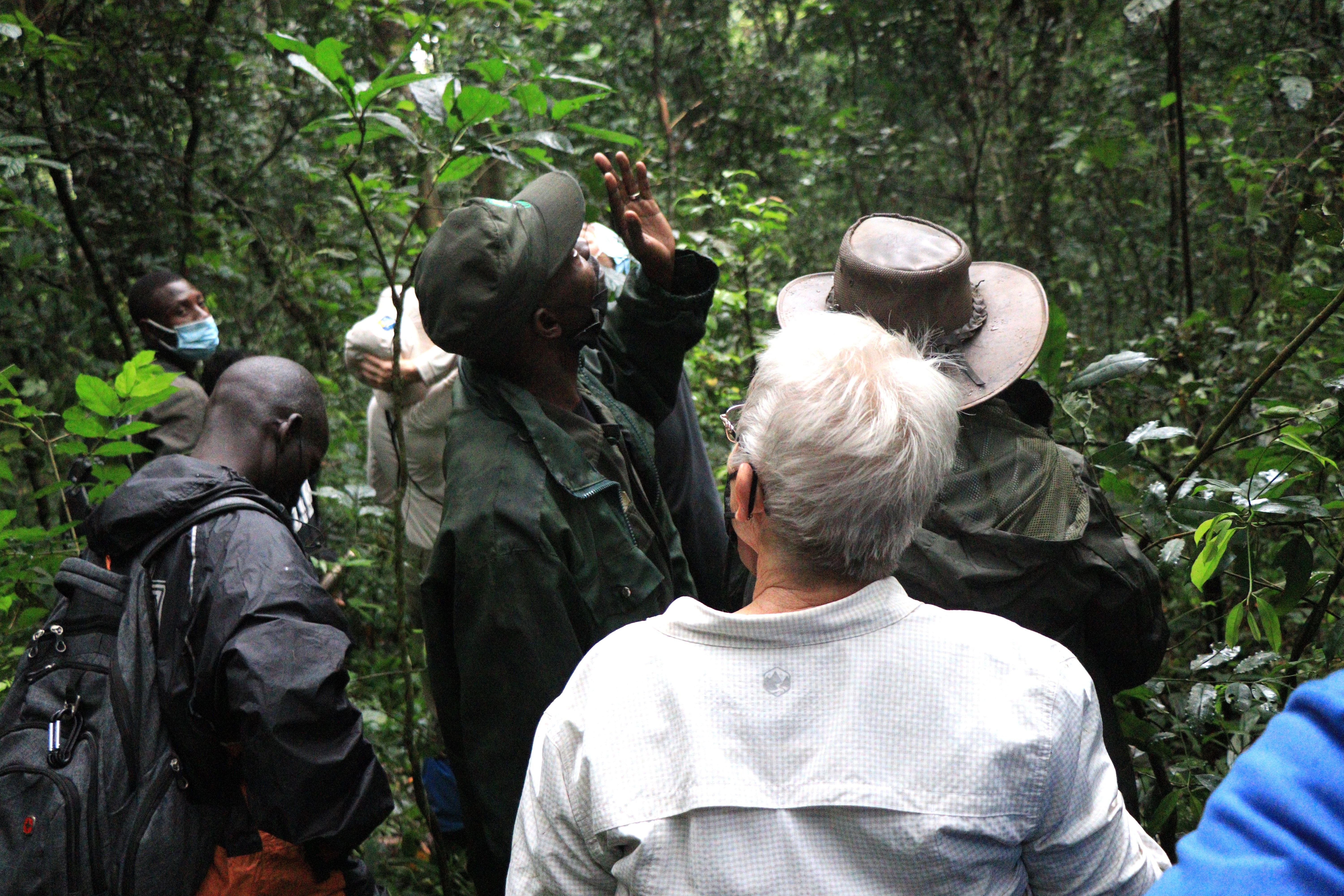
Bwindi is the place to go for mountain gorilla trekking in Uganda. It is both a UNESCO World Heritage Site, and one of the country’s most important biodiversity areas and is home to almost half of the world’s remaining mountain gorilla population. When trekking Gorillas, a trained guide and trackers take you into the forest in search of one of the habituated gorilla families. The terrain can be steep and muddy, and the length of the trek depends on where the gorillas are located that day.
Bwindi is divided into several trekking sectors, including Buhoma, Ruhija, Rushaga and Nkuringo. Your sector matters when planning accommodation and transport, so it is worth choosing the permit location and lodge together rather than treating Bwindi as one single trekking point. Uganda also offers a Gorilla Habituation Experience in Bwindi. The current UWA tariff lists this at $1,800 for foreign non-residents, compared with $800 for standard gorilla tracking.
Also Read: Uganda Gorilla Trekking: Permits, Cost & Best Time (2026 Guide)
Kibale National Park
Kibale is one of Uganda’s main destinations for chimpanzee trekking and is often called the primate capital of the country. The forest supports a remarkable variety of primates, with chimpanzees being the main attraction for most visitors. A chimpanzee trek is different from gorilla trekking, but it gives you the chance to watch wild chimpanzees moving through the forest, calling to one another and feeding in the trees.
Kibale also works well as part of a longer western Uganda itinerary because it can be combined with Queen Elizabeth National Park and, with more time, Bwindi. Under the current UWA tariff for 2026-2027, chimpanzee tracking in Kibale costs $300 for foreign non-residents. A longer Chimpanzee Habituation Experience is also available.
Queen Elizabeth National Park
Queen Elizabeth National Park is one of the most versatile stops on a Uganda safari because you can combine traditional game drives with a boat trip on the Kazinga Channel. The park is full of many animals, including many elephants, buffaloes, hippos, lions, antelope and many different of bird species. The Ishasha sector in the southern part of the park is also known for its tree climbing lions.
A boat cruise along the Kazinga Channel is one of the experiences that gives Queen Elizabeth a different character from a purely land based safari. You can see hippos in the water, elephants along the shoreline and numerous birds around the channel. Queen Elizabeth is also conveniently positioned for travelers combining chimpanzee trekking in Kibale with gorilla trekking in Bwindi.
Murchison Falls National Park
Murchison Falls is Uganda’s largest national park and one of the country’s most classic safari destinations. The Victoria Nile runs through the park before being forced through the narrow gorge at Murchison Falls. UWA currently describes the falls as an approximately eight metre wide gorge through which the Nile plunges 45 metres into the Devil’s Cauldron.
Here you can combine game drives with a boat trip along the Nile towards the falls. The northern sector is particularly known for its savanna wildlife, including giraffes, elephants, buffaloes and lions. Murchison Falls is farther north than the main western Uganda safari circuit, so adding it to a trip usually means allowing extra driving time or considering a domestic flight.
Kidepo Valley National Park
Kidepo is one of Uganda’s more remote safari destinations. Located in the country’s northeastern corner, it has a very different landscape from the forested southwest, as it has broad valleys, rugged mountains and semi arid scenery.
The park is a good choice for travelers who want a quieter safari setting and are interested in Uganda’s more remote landscapes. Wildlife includes large buffalo herds, elephants, giraffes, zebras, antelope and predators. Kidepo requires more planning because of its distance from Uganda’s main tourism circuit, but that remoteness is part of the appeal.
Lake Mburo National Park
Lake Mburo is a smaller and more accessible park that can work well at the beginning or end of a western Uganda safari, especially after gorilla trekking. It is known for zebras, impalas, elands and other antelope, and it offers experiences that are less common in Uganda’s larger parks, including walking and cycling experiences in designated areas. Because of its location between Kampala and southwestern Uganda, Lake Mburo can also be a useful stop when traveling overland towards Bwindi or returning to Kampala.
Jinja and the Source of the Nile
Jinja is not a traditional safari destination, but it makes a useful addition for travelers interested in Uganda beyond wildlife. The town is associated with the Source of the Nile and is known for activities on the river, including white water rafting and kayaking. It can be added before or after a wildlife focused itinerary, particularly for travelers arriving through Entebbe or Kampala.
How Many Days Do You Need for a Uganda Safari?
The length of your safari depends heavily on which regions you want to visit. A short gorilla focused trip can work in around 3 to 5 days, even less depending on where you start and whether you combine the experience with another destination.
For gorillas and chimpanzees, around 6 to 8 days gives you more room to combine Bwindi or Mgahinga with Kibale and another western Uganda destination. A broader itinerary including gorillas, chimpanzees and savanna wildlife can take 8 to 12 days or more. Adding Murchison Falls or Kidepo requires additional travel time because these destinations sit farther from the southwestern circuit.
The important thing is not to measure a Uganda safari only by the number of parks. Uganda is a large country, and some of the journeys between destinations are long. Breaking up the distance from Entebbe to Bwindi for instance with Queen Elizabeth, or a different park, is a common choice for our clients. This is one of the practical considerations we account for when creating a Uganda Safari Travel Guide and planning an actual Uganda safari for our clients. A realistic itinerary with enough time in each destination is usually more enjoyable than trying to cover everything in one trip.
When Is the Best Time to Visit Uganda?
Uganda can be visited throughout the year, but the best time depends on the type of safari you have in mind. The drier periods, generally around June to September and December to February, are popular for wildlife viewing because roads and forest trails are often easier to move through.
The wetter months can also be very enjoyable as well. During this time, the forests become especially lush, birdlife is active and some lodges offer lower rates during quieter periods. Rain is possible at any time in Uganda’s tropical forests, however, so gorilla and chimpanzee trekkers should be prepared for wet and muddy conditions even during generally drier months. UWA’s current 2026-2028 tariff also provides a lower season rate for gorilla and chimpanzee tracking in April, May and November, which definitely makes these months worth considering for travelers who have flexibility.
Getting Around Uganda
Road travel is an important part of a Uganda safari. The distances between destinations can be long, but traveling overland also gives you the chance to see rural communities, changing landscapes and the countryside between the parks.
A 4x4 safari vehicle is the usual choice for a private safari, particularly when traveling to national parks and on game drives. For travelers with limited time, domestic flights can also be used to reduce some of the longer road journeys. The choice between flying and driving depends on your itinerary, budget and how much time you have available.
Where to Stay in Uganda
Uganda has accommodation ranging from simple safari camps and comfortable lodges to high-end properties in national parks and forest areas. For gorilla trekking, the location of the lodge is particularly important because Bwindi is spread across different trekking sectors. Staying close to the relevant sector can make the morning of the trek considerably easier.
In the savanna parks, accommodation can be selected according to the game-viewing areas you want to explore and the kind of safari experience you prefer. When arranging Uganda safaris for our clients, we match accommodation to the route and planned activities rather than choosing lodges independently of the itinerary.
Also Read our Guide to Acommodation in Bwindi
What to Pack for a Uganda Safari
Packing for Uganda depends on the destinations and activities on your itinerary. For gorilla and chimpanzee trekking, bring sturdy hiking shoes or boots, lightweight long trousers, a waterproof jacket, comfortable layers and protection against rain. Gardening gloves can also be useful when moving through dense vegetation.
For game drives, neutral and comfortable clothing, sun protection, insect repellent and a light layer for cooler mornings are useful. A small daypack is also helpful for trekking days because you will want to carry water, snacks, rain protection and personal essentials without taking a large bag into the forest.
Contact us to discuss your trip and find the right Uganda Safari Travel Guide and itinerary for you.
Frequently Asked Questions
Can you combine gorilla trekking and a safari in Uganda? +
Yes. Bwindi or Mgahinga can be combined with Queen Elizabeth, Kibale, Lake Mburo or other destinations depending on the time available.
How long should you spend in Uganda? +
Around 5 days can work for a focused trip, while 8 to 12 days gives you more time to combine primates with classic safari destinations. Longer trips are useful if you want to include Murchison Falls or Kidepo.
What is the best time to visit Uganda? +
The dry seasons, June to September and December to February, are popular for wildlife viewing. April, May and November are lower-season months and can be good for travelers looking for lower rates.
Is Uganda good for a family safari? +
Yes. Uganda can be a great family destination, with wildlife drives, boat trips and forest experiences. We help families choose activities based on the children's ages and interests.