
Uganda
1 Day
1 Day Bird Watching at Mabamba Wetlands
Pricing
Request a Quote
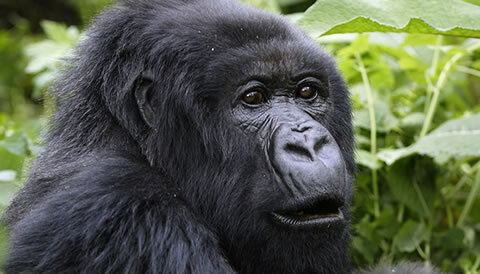
Bwindi Impenetrable Forest is a 321-square-kilometer rainforest in southwestern Uganda that protects 459 mountain gorillas, nearly half of the 1,063 left in the wild. It is the best-value place in Africa to trek them: a permit costs $800 per person from the Uganda Wildlife Authority (UWA), against $1,500 in Rwanda, and the park has more than 20 habituated families across four sectors: Buhoma, Ruhija, Rushaga, and Nkuringo. Treks take from 30 minutes to 6 hours each way through steep, dense forest, followed by one hour with the gorillas. The southern sectors are 4 to 5 hours by road from Kigali, which is how most Rwanda Eco Company and Safaris guests reach the park, and usually faster than the 8-to-10-hour drive from Entebbe.
| Location | Kanungu, Kabale, and Kisoro districts, southwestern Uganda |
| Size | 321 square kilometers |
| Status | National park since 1991, UNESCO World Heritage Site since 1994 |
| Altitude | 1,160 to 2,607 meters |
| Mountain gorillas | 459 (latest census) |
| Habituated families | More than 20, in four sectors |
| Standard permit | $800 (foreign non-resident) |
| Habituation experience | $1,500, up to 4 hours, Rushaga only |
| Group size | 8 visitors per family per day |
| Minimum age | 15 |
| Managed by | Uganda Wildlife Authority |
The most important planning fact about Bwindi is that your permit is for one sector, and the sectors are 2 to 4 hours apart by road. Your lodge has to be in the same sector as your permit, or trek day starts at 4:00 am in a vehicle. We book the permit first and the lodge second.
| Sector | Side of the park | Best for | Nearest airstrip | From Kigali |
|---|---|---|---|---|
| Rushaga | South | Most families, permit availability, habituation experience | Kisoro (1.5 hours) | 4 to 5 hours |
| Nkuringo | Southwest | Fit hikers, views of the Virunga volcanoes | Kisoro (2 hours) | 5 hours |
| Buhoma | North | Widest lodge choice, gentler trails, Uganda circuits | Kihihi (1.5 hours) | 6 to 7 hours |
| Ruhija | East | Birding, cooler air, quieter trailheads | Kihihi (2.5 hours) | 5 to 6 hours |
Rushaga has more habituated families than any other sector, so it is where permits are easiest to find at short notice. It is also the only place to do the four-hour habituation experience. The terrain is steep in places but treks are often shorter than in Nkuringo.
Nkuringo sits on a ridge at about 2,100 meters, and the gorillas feed in the valley below. You walk down to them and climb back out, which makes it the most demanding sector and the one with the best views, across to the Virunga volcanoes on a clear day.
Buhoma was the first sector opened to visitors, in 1993, and has the longest-established lodges and the lowest, warmest trailhead. It connects naturally to Queen Elizabeth National Park, so it suits travelers on a longer Uganda safari rather than those coming from Rwanda.
Ruhija is the highest sector, at around 2,300 meters, and the least visited. Birders come for the Mubwindi Swamp trail and the African green broadbill.
| Permit | Price (foreign non-resident) | Time with gorillas |
|---|---|---|
| Standard gorilla trek | $800 | 1 hour |
| Gorilla habituation experience | $1,500 | Up to 4 hours |
Both are issued by UWA for a named person, a fixed date, and a specific sector. They include park entry and the ranger team. They do not include transport, lodging, or the porter.
The habituation experience is unique to Bwindi. Four visitors, not eight, join researchers and trackers following a family that is partway through the two-to-three-year habituation process. The gorillas are warier and move more, so you work harder and see more natural behavior. Photographers and repeat trekkers get the most from it.
Permits for June to August and December to February sell out three to six months ahead. For package prices that include them, see our Uganda gorilla trekking packages.
Trek day starts with a 7:30 am briefing at your sector’s ranger station, where groups of eight are assigned a family. Trackers have been out since dawn following the previous night’s nests. From the trailhead you may walk for 30 minutes or for 6 hours, on narrow paths, up and down ridges, often with the ranger cutting the last stretch by machete. This is what “impenetrable” means.
Bwindi is lower than Rwanda’s Volcanoes National Park, so altitude is less of a factor, but it is wetter, steeper underfoot, and darker under the canopy. Three things make it manageable:
Travelers who cannot manage the hike can book a sedan chair, carried by a team of porters, for roughly $300 to $500.
“From Kigali I send most guests to Rushaga. The border is easy, the drive is half the one from Entebbe, and there are enough families that we can nearly always find a permit,” says Reginal Hakizimana, founder of Rwanda Eco Company and Safaris.
From Kigali (4 to 5 hours). Drive north to the Cyanika border near Kisoro, or the Katuna border near Kabale, and continue to Rushaga or Nkuringo. The East Africa Tourist Visa ($100) covers Rwanda and Uganda on one document, so the crossing takes 20 to 40 minutes. This is the shortest route to Bwindi from any international airport.
From Entebbe or Kampala (8 to 10 hours). The drive crosses the equator and most of western Uganda. It works best broken up with a night at Lake Mburo or as the end of a circuit through Kibale and Queen Elizabeth.
By air (about 1.5 hours). Daily scheduled flights from Entebbe land at Kihihi for Buhoma and Ruhija, or Kisoro for Rushaga and Nkuringo. Luggage is limited to 15 kilograms in soft bags.
Bwindi is open all year and treks run every day.
Temperatures range from about 11°C (52°F) at night to 23°C (73°F) by day, cooler in Ruhija and Nkuringo. It can rain in any month.
Both parks protect mountain gorillas, and the hour you spend with them is the same. Choose Bwindi if price matters, if you want the habituation experience, or if a hard rainforest hike is part of the appeal. Choose Volcanoes National Park in Rwanda if you have only two or three days, want an easier trek, or want an ultra-luxury lodge. With five days or more, do both: the parks are four hours apart. Our Bwindi vs Volcanoes comparison and Rwanda vs Uganda gorilla trekking guide go through the decision point by point.
Every itinerary below includes the gorilla permit, a private 4x4 with driver-guide, lodging, and meals.
For the full planning picture, including Mgahinga and how Uganda fits with a wider safari, read our Uganda gorilla trekking safari guide.
A standard Bwindi gorilla trekking permit costs $800 per person for foreign non-residents, set by the Uganda Wildlife Authority. It covers park entry, rangers and trackers, and one hour with a habituated gorilla family. The gorilla habituation experience in the Rushaga sector costs $1,500 and gives up to four hours with a family that is still being habituated.
Rushaga is the best choice for most travelers arriving from Kigali: it has the most gorilla families, the best permit availability, and the only habituation experience. Buhoma suits travelers on a Uganda circuit who want the widest choice of lodges and gentler trails. Ruhija is best for birders, and Nkuringo for fit hikers who want the biggest views.
From Kigali, drive 4 to 5 hours through the Cyanika or Katuna border post to the southern sectors, Rushaga and Nkuringo. From Entebbe, drive 8 to 10 hours, or fly about 1.5 hours to Kihihi airstrip (for Buhoma and Ruhija) or Kisoro airstrip (for Rushaga and Nkuringo) and transfer 1 to 2 hours by road.
Harder than in Rwanda's Volcanoes National Park. Bwindi is steep, dense rainforest with muddy trails, and treks last from 30 minutes to 6 hours each way depending on where the gorillas slept. Reasonable walking fitness is enough for most families, a porter costs about $20, and travelers with limited mobility can book a sedan chair carried by a team of porters.
The most recent census counted 459 mountain gorillas in the Bwindi-Sarambwe ecosystem, nearly half of the 1,063 left in the wild. More than 20 families are habituated for visitors.
June to August and December to February are the driest months, with the best trail conditions and the highest permit demand. Bwindi is a rainforest and rain can fall on any day, so pack waterproofs in every season. March to May and September to November are wetter, quieter, and cheaper for lodges.
Bwindi is better on price ($800 against $1,500 for the permit), number of gorilla families, and for a wild rainforest trek. Volcanoes National Park in Rwanda is better on access (2.5 hours from Kigali airport), easier terrain, and luxury lodges. Travelers with a week often trek in both.
Updated November 10, 2026
Pricing
Request a Quote
Pricing
Request a Quote
Pricing
Request a Quote
Get in Touch
Talk to our experts about building a trip tailored to your travel dates, budget, and must-have experiences.