Gorilla trek day in Rwanda follows a set rhythm that has been refined over decades: report to the Kinigi headquarters of Volcanoes National Park by 7:00 am, get briefed and assigned to one of about a dozen habituated gorilla families in a group of no more than eight visitors, hike between 30 minutes and 4 hours up volcanic slopes, and then spend exactly one hour with wild mountain gorillas. The permit costs $1,500 per person, set by the Rwanda Development Board (RDB), and sightings are close to guaranteed because trackers follow each family daily. Around 1,000 mountain gorillas remain in the wild, most of them split between the Virunga massif and Uganda’s Bwindi Impenetrable Forest, which is what makes this single hour one of the world’s rarest wildlife encounters. Here is how the whole day actually unfolds.
The day before: get to Musanze and rest
A good trek day starts the afternoon before. Sleep within reach of the park: the lodges around Kinigi and Musanze put you 15 to 30 minutes from the 7:00 am briefing, while staying in Kigali means a 4:30 am departure and a groggy trek. Use the afternoon to acclimatize gently, since Musanze sits at about 1,850 meters and the trek climbs well above it. Lay out your gear, charge camera batteries, and confirm the morning pickup time with your guide, who will also pass any trek-difficulty request to the rangers ahead of the assignment. Eat a proper dinner, skip the second beer, and drink more water than feels necessary; mild altitude headaches are the most common avoidable complaint on trek morning. If you arrive in Rwanda only the day before your trek, keep that evening completely free. Weather over the Virungas changes fast, and a rested trekker enjoys a wet trek far more than a tired one enjoys a dry one.
5:30 am: Early breakfast at your lodge
Lodges around Kinigi and Musanze are built around trek day, so breakfast starts early and packed lunches are standard. Dress for the trek before you leave: boots, long trousers, layers. Mornings at this altitude are cold, often around 10°C (50°F), but you will shed layers fast once the trail climbs. Your driver-guide handles the timing; it is roughly 15 to 30 minutes from most lodges to the park headquarters.
7:00 am: Briefing at Kinigi headquarters
The day formally begins at the RDB’s Kinigi offices at the park edge. While permits are verified, guests gather over coffee and tea and watch a performance by Intore dancers, one of the better pre-trek rituals anywhere in African travel. Rangers then divide the day’s visitors into groups of eight per gorilla family.
This assignment moment matters more than most travelers realize. The park has about 12 habituated families open to tourism, which caps trekking at 96 permits per day, and families live at very different distances from the trailheads. Rangers weigh age, fitness, and any requests when assigning groups. If you want an easier or harder trek, this is when to say so, ideally through your guide the day before as well.
8:00 am: Drive to the trailhead, meet your porters
Each group drives 20 to 45 minutes to the trailhead below its assigned family’s sector. Porters wait here, and hiring one costs $10 to $20 plus tip. Take the porter even if you feel strong. They carry your pack, steady you on the steep sections, and the fee goes directly into the villages bordering the park, many porters being former farmers or reformed poachers whose income now depends on the gorillas staying protected.
At the wall marking the park boundary, your lead ranger reviews the rules once more, and the climb begins.
8:30 am to midday: The hike
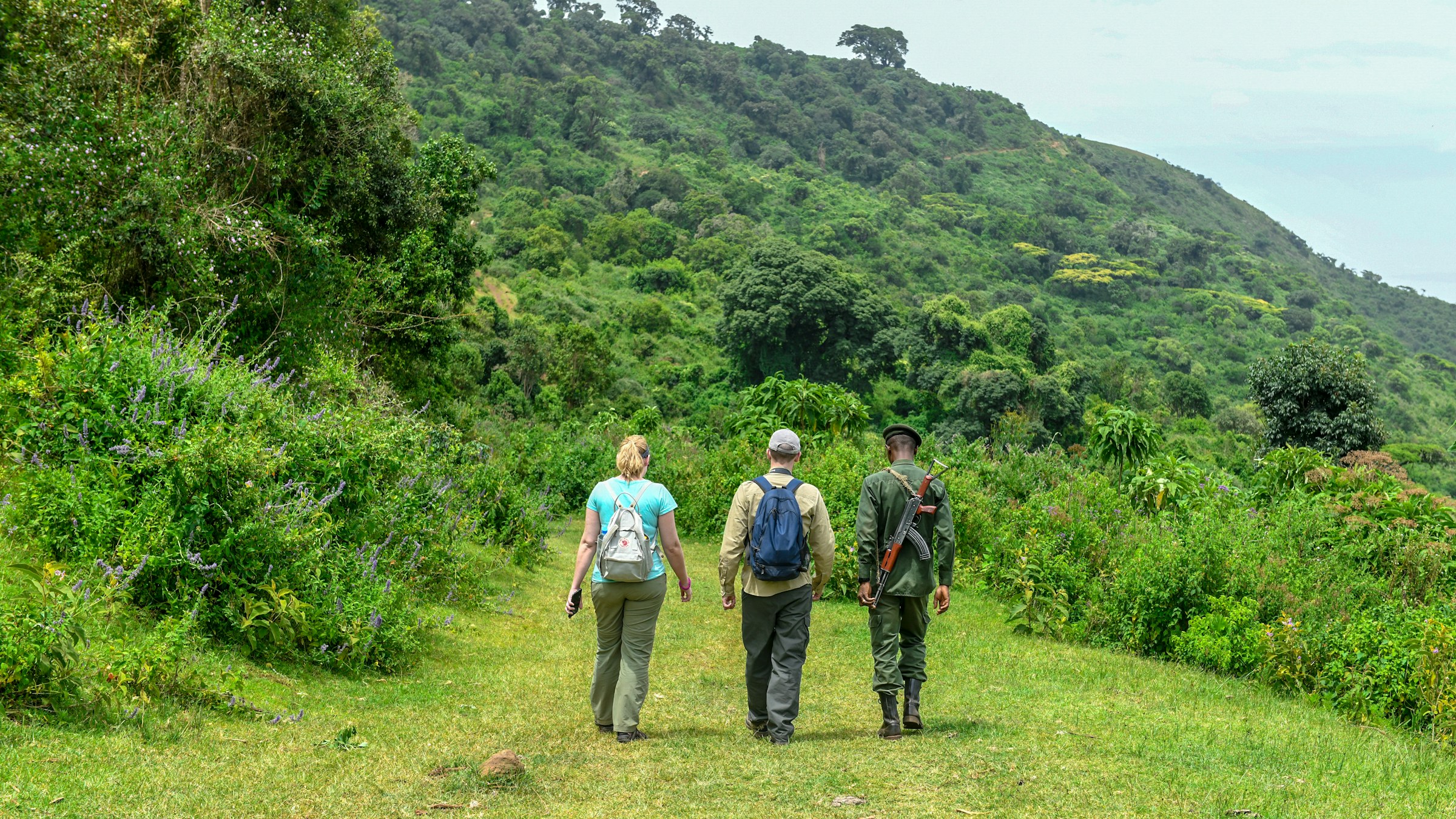
The trek itself is the day’s big variable. The trail crosses farmland, then a buffalo wall, then bamboo forest, then open hagenia meadows, climbing anywhere between 2,500 and 3,000 meters. Some groups reach their gorillas in half an hour; treks to far-ranging families can take 4 hours or more each way. Mud is normal in any season, which is why the boots and gloves matter.
What shortens the search: each gorilla family is shadowed daily by RDB trackers, who note where the family builds its overnight nests and radio the morning position to your rangers. Your group is navigating to a known location, not hoping for luck, which is why success rates are effectively above 95%.
When the trackers are close, the rangers stop the group: bags, sticks, and food stay behind with the porters (walking sticks can alarm gorillas), cameras come out, flashes off, voices down.
The hour with the gorillas
Then you step through the vegetation and the clock starts. For exactly 60 minutes, you share the slope with a wild gorilla family: a silverback that may weigh 200 kilograms, females grooming, juveniles tumbling through the greenery, sometimes closer to you than the official 7-meter rule, because nobody has explained the rule to the gorillas. The rangers read the family’s mood constantly and position the group; all you have to do is stay calm, keep your voice low, and, if the silverback moves, follow the ranger’s lead by crouching and looking away.
Practical advice from hundreds of treks: put the camera down for at least ten of the sixty minutes. The photographs will be spectacular anyway, and the memory that lasts is the unmediated one, of eye contact with a species that shares about 98% of our DNA.
“Guests train for the hike and worry about the rules, and then the hour starts and all of it disappears,” says Reginal Hakizimana, founder of Rwanda Eco Company and Safaris. “I have watched a silverback walk calmly past a guest who could not move for joy. Nobody is ever ready for how ordinary the gorillas make it feel. They just let you into their morning.”
Midday to afternoon: The descent and your certificate
The hike down is faster but harder on the knees, another argument for the walking stick and porter. Back at the trailhead, tip your porter (in cash, US dollars or Rwandan francs both work) and return to Kinigi, where each trekker receives an official gorilla trekking certificate with the name of the family visited. Most guests are back at their lodge by early-to-mid afternoon, in time for a hot shower, lunch, and an afternoon of doing very little, which you will have earned.
How trek day fits into a full trip
Trek day needs to sit inside a properly planned itinerary: permits must be secured months ahead through your operator, and you should sleep near the park the night before. For the planning side, see our step-by-step guide to booking gorilla permits and the full Rwanda gorilla trekking cost breakdown. To see how the trek anchors a complete week in Rwanda, our 7-day Rwanda gorilla safari itinerary places it alongside Akagera and Lake Kivu, and the compact version is our 3 Days Rwanda Gorilla Trekking Safari.
Rwanda Eco Company and Safaris, founded by Reginal Hakizimana, has guided gorilla treks since 2008 and is a member of RTTA, ASTA, ATTA, and USTOA, rated 5.0/5 across 238 TripAdvisor reviews. Contact our team to lock in permit dates, or browse our gorilla safaris to build the rest of the trip around the hour that makes it all worthwhile.
Frequently Asked Questions
What time does gorilla trekking start in Rwanda? +
Trek day starts early. Visitors report to the Kinigi headquarters of Volcanoes National Park by 7:00 am for registration, coffee, a cultural dance performance, and the ranger briefing. Treks set off between roughly 8:00 and 8:30 am after visitors are assigned to gorilla families. Most lodges near the park serve breakfast from about 5:30 am to get you there in time.
How hard is the hike to see the gorillas? +
It varies widely by which gorilla family you are assigned. Hikes range from about 30 minutes to 4 hours or more each way, at elevations of 2,500 to 3,000 meters, on volcanic slopes that can be muddy and steep. Rangers try to match groups to fitness levels, and travelers who request an easier trek are usually assigned a nearer family. A porter, at $10 to $20, makes a real difference.
How long do you spend with the gorillas? +
Exactly one hour. Once your group reaches the gorilla family, rangers start the clock, and the 60-minute limit is strictly enforced to minimize stress and disease risk for the gorillas. It is longer than it sounds: the gorillas feed, play, and rest around you, often within a few meters, and the hour is consistently described by guests as the fastest of their lives.
What are the rules during the gorilla encounter? +
Keep at least 7 meters (about 23 feet) from the gorillas, though curious youngsters sometimes close the gap themselves. No flash photography, no eating or drinking near the gorillas, keep your voice low, and never touch a gorilla. If a gorilla approaches, crouch slowly and look down. Anyone who is ill on trek day is asked not to trek, because gorillas can catch human respiratory infections.
What should I wear and pack for gorilla trekking? +
Wear sturdy waterproof hiking boots, long trousers tucked into socks, a long-sleeved shirt, and bring a rain jacket in any season. Pack gardening-style gloves for gripping vegetation, insect repellent, at least 2 liters of water, snacks, and a camera with the flash disabled. Lodges provide walking sticks, and porters carry your daypack. Keep luggage weight on your back minimal; the altitude does the tiring.
Am I guaranteed to see the gorillas? +
Sightings are close to guaranteed, well above a 95% success rate. Each habituated family is followed daily by trackers who radio the family's overnight nesting location to your rangers in the morning, so treks navigate to a known position rather than searching blind. In the rare case a group is not found, the Rwanda Development Board's policies provide for a repeat trek or refund, and your operator manages that process.
Who can go gorilla trekking in Rwanda? +
Anyone aged 15 or older with a valid permit. The minimum age of 15 is a Rwanda Development Board rule with no exceptions, and proof of age may be checked at the briefing. There is no upper age limit: older trekkers regularly complete the trek with the help of porters, and for travelers with limited mobility, a carried-stretcher service can be arranged for an additional fee of around $200 to $300.
Updated August 5, 2026