A Uganda gorilla trekking safari is a guided trip built around trekking wild mountain gorillas in Bwindi Impenetrable Forest, which shelters nearly half of the world’s roughly 1,000 remaining mountain gorillas (IUCN). The trek itself lasts one hour on an $800 permit, but the safari around it, the itinerary, the lodges, the transport, and any parks you add, is what you actually plan and book. This guide is about that trip: sample itineraries, how to choose between budget and luxury, what a package includes, and how it all fits around your permit. For the underlying basics, permit pricing, the best time to trek, and Bwindi versus Mgahinga, see our companion Uganda gorilla trekking guide.
What is a Uganda gorilla trekking safari?
A gorilla safari is not just the permit. It is a planned itinerary that ties the permit together with everything around it: lodging near the right Bwindi sector, private transport with a driver-guide, park fees, transfers, and often a second activity or park. Because the $800 permit (set by the Uganda Wildlife Authority, versus $1,500 in Rwanda) is limited to eight visitors per gorilla family per day and is non-refundable once issued, the whole trip is planned around securing it first, then building the days out from there. That is why most travelers book a complete safari through a licensed operator rather than piecing it together themselves.
Sample Uganda gorilla safari itineraries
Nearly every Uganda gorilla safari centers on one trek in Bwindi. What changes is how you get there and what you add. Three common shapes:
- Short (2 to 3 days), fly-in: the fastest option. Fly from Entebbe to the Kihihi or Kisoro airstrip, trek the next morning, and fly out. Our 2 Days Uganda Gorilla Trekking Safari is the tightest version, ideal if you are short on time or bolting gorillas onto a wider trip.
- Classic (4 to 5 days), overland: the most popular balance. Drive from Entebbe or via the Kigali route, overnight en route, trek in Bwindi, and return with a lake or park stop. Our 4 Days Gorilla Tracking Safari in Uganda is the template most first-timers choose.
- Extended (7+ days), multi-park: pair Bwindi with Queen Elizabeth National Park, Kibale chimpanzees, or a cross-border trek in Rwanda’s Volcanoes National Park on one East Africa Tourist Visa.
To make the classic shape concrete, a 4-day safari via the Kigali route usually runs like this:
- Day 1: Arrive in Kigali, transfer by road to a lodge near your Bwindi sector, and settle in ahead of an evening briefing.
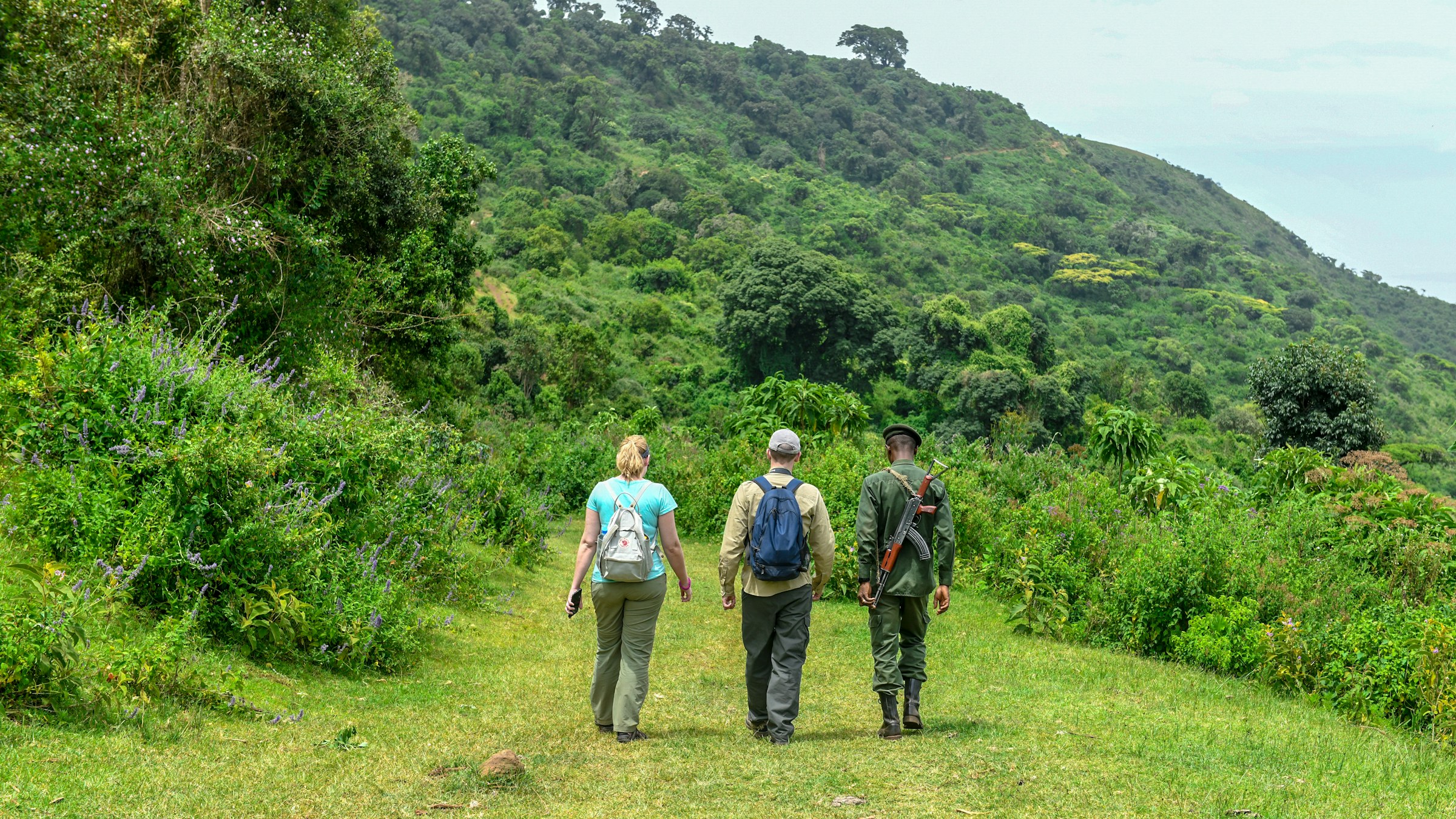
- Day 2: After an early breakfast, report to the park headquarters for the ranger briefing, then trek. You spend your permitted hour with the gorilla family before returning to rest at the lodge.
- Day 3: Add a second activity such as a Batwa community visit, a forest nature walk, or golden monkey tracking, then relax in the afternoon.
- Day 4: Transfer back to Kigali for your onward flight, or continue to a second park to extend the trip.
The 2-day fly-in version strips this back to arrival, trek, and departure, while the extended itineraries simply add parks and nights on either end.
A useful rule when planning: build in a buffer day around the trek. Hikes can run from one to six hours in unpredictable weather, and a spare day protects the rest of your itinerary.
Choosing your safari: budget, mid-range, or luxury
The permit price is fixed at $800 no matter how you travel, so what moves the total is lodging, transport, and trip length. A complete guided safari typically falls into three tiers:
| Tier | Per person | What you get |
|---|---|---|
| Budget | ~$1,800–2,500 | Simpler guesthouses, shared or basic transport, shorter trips |
| Mid-range | ~$2,500–4,000 | Comfortable lodges, private driver-guide, the popular 4-day shape |
| Luxury | ~$5,000+ | High-end lodges, fly-in transfers, multi-park or cross-border add-ons |
Because the $800 permit is a large fixed share of any budget trip, the value gap between budget and mid-range is often smaller than travelers expect, and the extra comfort near a demanding trek is worth it for many. Across all tiers, a Uganda safari tends to cost 15 to 30 percent less than an equivalent Rwanda trip.
What usually pushes travelers up a tier is the lodge. Gorilla-sector properties range from simple guesthouses to intimate luxury lodges with forest views, and since you return tired from a long trek, many decide the comfort is worth it. Transport is the other lever: a private 4x4 with a dedicated driver-guide costs more than shared transfers but gives you flexibility around the trek and your other activities.
Which route: fly via Kigali or drive from Entebbe?
How you reach Bwindi shapes the whole itinerary, and there are three options:
- Kigali route (often fastest): fly into Kigali, Rwanda, then drive 3 to 4 hours to the southern Bwindi sectors. As a Kigali-based operator we use this route often, since it beats the long haul from Entebbe.
- Fly-in from Entebbe: a scheduled domestic flight to the Kihihi or Kisoro airstrip, then a 1-to-2-hour transfer. Saves a day versus driving.
- Overland from Entebbe: an 8-to-10-hour drive, usually split over two days with wildlife stops. The cheapest option, and the most scenic.
What a package includes, and what it does not
Knowing what is bundled prevents surprises. A standard Uganda gorilla safari package usually includes the $800 permit, lodging, private transport and a driver-guide, park entry fees, and airport transfers. It usually excludes international flights, the Uganda visa or East Africa Tourist Visa, travel insurance, tips, drinks, and personal gear. A porter for the trek ($15 to $20) is a small add-on worth budgeting for, both to ease the climb and to support local communities. Always confirm inclusions in writing, since the permit alone accounts for a large part of the price.
Combining your gorilla safari with other parks
Bwindi pairs naturally with the rest of the region, and adding a second destination often makes the long journey more worthwhile. Popular combinations include Queen Elizabeth National Park for tree-climbing lions and a boat safari, Kibale Forest for chimpanzee trekking, and a cross-border extension to Rwanda’s Volcanoes National Park. For help weighing the two countries before you commit, read our Rwanda vs Uganda gorilla trekking guide.
“The mistake I see is people booking a permit and then scrambling to build a trip around it,” says Reginal Hakizimana, founder of Rwanda Eco Company and Safaris. “We do it the other way. We start with the date and the permit, then shape the itinerary, the route, the lodges, the extra parks, around it. Plan the safari as one piece and everything from your flights to your rest days just works.”
Booking your Uganda gorilla safari
Permits are limited, non-refundable once issued, and best secured through a licensed operator who can confirm availability and coordinate the permit, lodging, transport, and route as a single plan. Rwanda Eco Company and Safaris, founded by Reginal Hakizimana and guiding gorilla treks since 2008, arranges Uganda safaris in Bwindi and Mgahinga, the cross-border Kigali route, and combined Rwanda and Uganda itineraries. We are members of the Rwanda Tours and Travel Association (RTTA), ASTA, ATTA, and USTOA, and hold a 5.0/5 rating across 238 TripAdvisor reviews.
For what each trip length costs, with real itineraries and the drive times from Entebbe, see our breakdown of Uganda gorilla trekking packages.
Ready to plan? Browse our gorilla safaris or contact our team for a tailored itinerary and current permit availability in Uganda.
Frequently Asked Questions
How many days do you need for a Uganda gorilla safari? +
The minimum is 2 to 3 days if you fly into Bwindi, trek, and fly out. A classic overland safari runs 4 to 5 days, allowing a night en route and a relaxed pace. Seven days or more lets you add a second park such as Queen Elizabeth or a cross-border trek in Rwanda. Most first-timers choose the 4-day option.
What does a Uganda gorilla safari include? +
A typical package includes your $800 gorilla permit, lodging near your Bwindi sector, private transport with a driver-guide, park fees, and airport transfers. It usually excludes international flights, Uganda visa, travel insurance, tips, and drinks. Always confirm exactly what is bundled, since the permit alone is a large share of the total cost.
How much does a full Uganda gorilla safari cost? +
Beyond the $800 permit, a complete guided safari usually runs $2,500 to $4,000 per person for a mid-range trip and $5,000 or more for a luxury or multi-park itinerary. Budget options exist but still carry the fixed permit cost. Overall, Uganda tends to cost 15 to 30 percent less than an equivalent Rwanda gorilla safari.
Is it better to fly or drive to Bwindi? +
Flying saves a full day in each direction. You can fly from Entebbe to the Kihihi or Kisoro airstrip, or take the Kigali route, flying into Rwanda and driving 3 to 4 hours to the southern Bwindi sectors, which is often faster than the 8-to-10-hour drive from Entebbe. Driving costs less and shows you more of the countryside.
Can you combine a Uganda gorilla safari with Rwanda? +
Yes, and many travelers do. A single East Africa Tourist Visa (around $100) covers both countries, and Bwindi sits within driving distance of Rwanda's Volcanoes National Park across the border. A combined safari of 7 to 10 days lets you trek gorilla families in both countries and compare the two parks directly.
When should you book a Uganda gorilla safari? +
Book 3 to 6 months ahead, and earlier for the June-to-August and December-to-February peak seasons. Permits are limited to eight per gorilla family per day and sell out for popular dates. Because the whole itinerary is built around permit availability, securing the permit first is the single most important step in planning.
What is the best Uganda gorilla safari for first-timers? +
The classic 4-day overland safari is the best all-round choice. It balances cost and comfort, includes a night to break up the journey, and leaves a buffer day around the trek in case of weather or a long hike. Travelers very short on time choose the 2-to-3-day fly-in option instead.
Updated July 7, 2026