Spending an hour watching wild mountain gorillas in their natural habitat is one of those travel experiences that is difficult to explain until you have actually done it. For travellers researching the Best Gorilla Trekking Tours in East Africa, the same question comes up again and again: should you trek in Rwanda or Uganda?
At Rwanda Eco Company & Safaris, we arrange gorilla trekking tours in both Rwanda and Uganda. After working with travellers across both destinations, our view is fairly simple: there is no universal “best” country for gorilla trekking. The right choice depends on what kind of trip you are actually trying to have.
Best Gorilla Trekking Tours in Rwanda and Uganda
Rwanda: Volcanoes National Park
Volcanoes National Park is located in northwestern Rwanda, within the Virunga volcanic mountain range.
Gorilla trekking here starts at the park headquarters in Kinigi, where visitors receive a briefing before heading towards their assigned gorilla family. Rwanda’s official tourism information describes the tracking experience as relatively accessible. In our experience this is the case. although the actual hike can still be steep and physically demanding depending on where the gorillas are located that morning.
The length of the trek is not fixed. You could be walking for a relatively short time before finding the family, or spending several hours in the forest. That is mainly because the location of the gorillas changes, so it would be misleading to promise a particular trekking duration.
One practical advantage of Rwanda is the relatively compact geography. Volcanoes National Park is roughly a 2.5 / 3 hours drive from Kigali, which makes it possible to build a gorilla trek into a short Rwanda itinerary.
Uganda: Bwindi and Mgahinga
On the other hand, Uganda has two different mountain gorilla trekking settings. Bwindi Impenetrable National Park is the larger and more widely known location, and it is home to almost half of the world’s mountain gorilla population. The park is divided into four main trekking sectors: Buhoma, Ruhija, Rushaga and Nkuringo.
Mgahinga Gorilla National Park is located within the Virunga Mountains and is a more laid back alternative to Bwindi. According to UWA, Mgahinga has about eight gorilla permits available per day and can offer a different trekking environment from the denser forests of Bwindi.
UWA states that Ugandan gorilla tracking generally requires moderate fitness and can last between two and seven hours, including the hike to and from the gorillas. Once you find the family, the observation time is limited to one hour.
That unpredictability is worth remembering when planning your day, since gorilla trekking is not a timed hike where everyone finishes at noon. The forest, terrain and movements of the gorillas determine how the morning progresses.
Also Read: Tracking Mountain Gorillas in East Africa
Is Rwanda or Uganda easier to reach?
For a short trip, Rwanda is much easier to work with logistically. Kigali International Airport is just a few hours’ drive of Volcanoes National Park, so you can arrive in Rwanda, travel north, trek the following morning and return to Kigali without spending several days simply getting to and from the forest. This makes Rwanda particularly practical for travellers with only two, three or four days available.
Uganda requires more planning, since Bwindi is much farther from Entebbe than Volcanoes National Park is from Kigali, so an overland journey can take most of a day. There are many options we use to facilitate gorilla trekking for our clients in Uganda, including transfering them on the shorter route to Bwindi, via Kigali. Some travellers instead fly straight to the trekking region, while others deliberately make the journey part of a longer Uganda safari.
So if your question is simply which destination makes a short gorilla trip easier, the geography gives you a fairly straightforward answer: Rwanda.
Gorilla Permit Prices: Rwanda vs Uganda
Permit prices are one of the biggest differences when comparing Best Gorilla Trekking Tours in Rwanda and Uganda. A standard Rwanda gorilla trekking permit currently costs US$1,500 per person per day for international visitors, although special rates apply to Rwandan citizens, East African citizens, foreign residents and some other categories. Rwanda’s official tourism information confirms the US$1,500 international rate and a minimum trekking age of 15.
Uganda’s current tariff structure is different. Under the UWA 2026 to 2028 tariff, a gorilla tracking permit is US$800 for foreign non-residents, US$700 for foreign residents, US$500 for visitors in the Rest of Africa category and UGX 300,000 for East African citizens. The tariff also introduces a low season foreign non resident rate of US$600 for April, May and November.
There is one experience that makes Uganda particularly interesting for travellers who want more time in the forest. The Gorilla Habituation Experience takes place in the Rushaga area of southern Bwindi. Rather than the standard one hour gorilla encounter, habituation involves spending substantially longer with a gorilla group that is still becoming accustomed to human presence, alongside researchers and trackers. It is priced as US$1,800 for foreign non-residents.
For travellers comparing the two countries purely on permit cost, Uganda therefore has a lower standard international permit price. But the permit is only one part of the safari budget. Flights, accommodation, road transfers, meals, border crossings where applicable and additional activities can make a substantial difference to the final cost.
Read: Our Full Breakdown of Rwanda’s Updated Gorilla Trekking costs
What Is Accommodation Like?
Rwanda has a strong luxury safari offering around Volcanoes National Park, with high-end properties such as Bisate Lodge, Singita Kwitonda Lodge and One&Only Gorilla’s Nest, alongside comfortable mid-range hotels and guesthouses. You can explore options for accommodation in Volcanoes National Park from our selections.
Uganda offers a wider range of accommodation across Bwindi’s different sectors, from simple lodges and camps to high-end properties. Because the sectors are geographically separate, choosing accommodation in Bwindi close to your gorilla trekking trailhead is particularly important.
Also Read: Rwanda Vs Uganda Gorilla Trekking
Frequently Asked Questions
How Difficult Is Gorilla Trekking? +
Gorilla trekking can range from an easy hike to several hours of steep, muddy and uneven terrain. Porters are available to help with bags and difficult sections.
What Is the Minimum Age for Gorilla Trekking? +
The minimum age for gorilla trekking is 15 years in both Rwanda and Uganda.
When Is the Best Time for Gorilla Trekking? +
Gorilla trekking is available year-round. The drier months generally offer easier trail conditions, while wetter months can bring lower permit prices in Uganda.
What Should I Pack for a Gorilla Trek? +
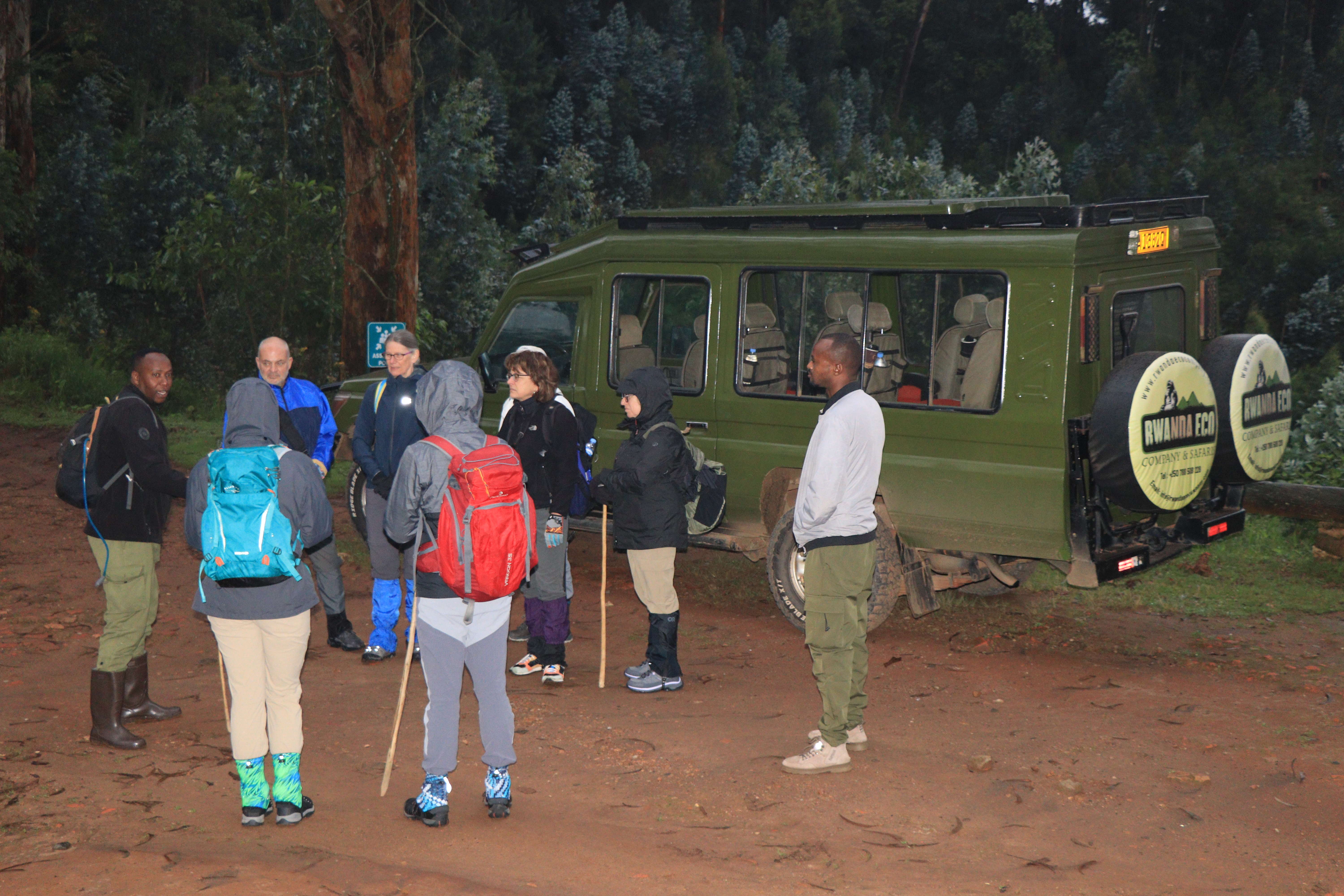
Bring sturdy hiking boots, long trousers, waterproof clothing, gloves, water, snacks and a small backpack. Gaiters are useful in muddy conditions.
Are the Best Gorilla Trekking Tours Ethical? +
Responsible gorilla trekking supports conservation and surrounding communities. Visitors should follow park rules, keep their distance and never touch or feed the gorillas.