
Rwanda Uganda Tanzania
10 days
10 Days East Africa Combo Safari, Rwanda, Uganda & Tanzania
From
$7,800 /person
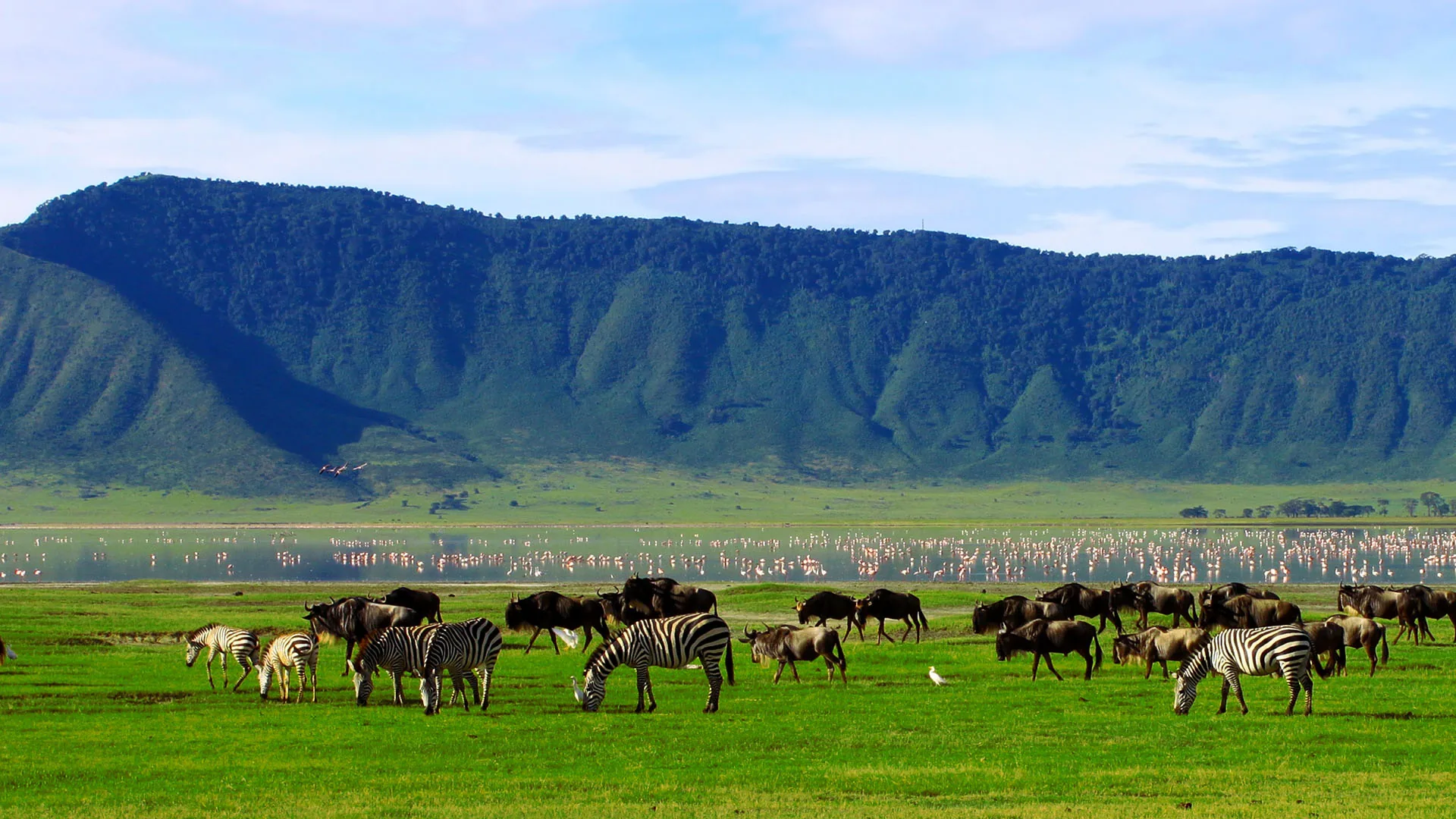
The Ngorongoro Crater is the world’s largest intact volcanic caldera, formed when a giant volcano collapsed around two to three million years ago. Today its 260 square-kilometre floor is one of the densest concentrations of wildlife in Africa.
Around 25,000 large animals live on the crater floor, and the steep walls keep them largely contained, making sightings reliable year-round. It is one of the few places where you have a real chance of seeing all of the Big Five, including the rare black rhino, in a single game drive.
The wider Ngorongoro Conservation Area is also home to Maasai pastoralists, who graze their cattle alongside the wildlife, and to Olduvai Gorge, one of the most important paleoanthropological sites in the world.
Ngorongoro sits between Arusha and the Serengeti and is a standard stop on the northern circuit, reached by road in around three to four hours from Arusha.
From
$7,800 /person
Pricing
Request a Quote
Pricing
Request a Quote
Get in Touch
Talk to our experts about building a trip tailored to your travel dates, budget, and must-have experiences.