The best tour operators in Rwanda share six things you can verify yourself: a Rwanda Development Board (RDB) tourism operating license, membership of the Rwanda Tours and Travel Association (RTTA), gorilla permits booked in your name through RDB, their own vehicles and employed driver-guides, a written confirmation that names every lodge, and reviews on more than one platform that match the licensed company name. Rwanda has well over a hundred registered operators and a long tail of resellers who book through them. This guide explains how to tell the two apart in under an hour, what a good operator does on trek day that a reseller cannot, and the questions to ask before you pay a deposit. Rwanda Eco Company and Safaris is one of the operators this checklist describes; we wrote it so that you can check us too.
The six-point checklist
1. RDB license
Every tour operator in Rwanda must hold a tourism operating license from the Rwanda Development Board. Ask for the license number. A licensed operator will send it the same day. If the answer is a reference to a “partner” or “ground handler”, you are talking to a reseller, and the company that actually runs your safari is someone you have not spoken to.
2. RTTA membership
The Rwanda Tours and Travel Association is the industry body. Membership is not mandatory, but it is the fastest way to confirm that an operator is established, based in Rwanda, and known to its peers. International memberships (ASTA, ATTA, USTOA) add consumer protection for US travelers, and USTOA in particular requires a $1 million bond.
3. Permits in your name
Gorilla permits are issued by RDB to a named traveler for a specific date. A real operator books the permit under your passport name and can send you the RDB confirmation. A reseller often holds permits under its own name or a partner’s and reassigns them, which is where double bookings and “your date is no longer available” emails come from. Our guide to booking gorilla permits covers what the confirmation should look like.
4. Their own vehicles and guides
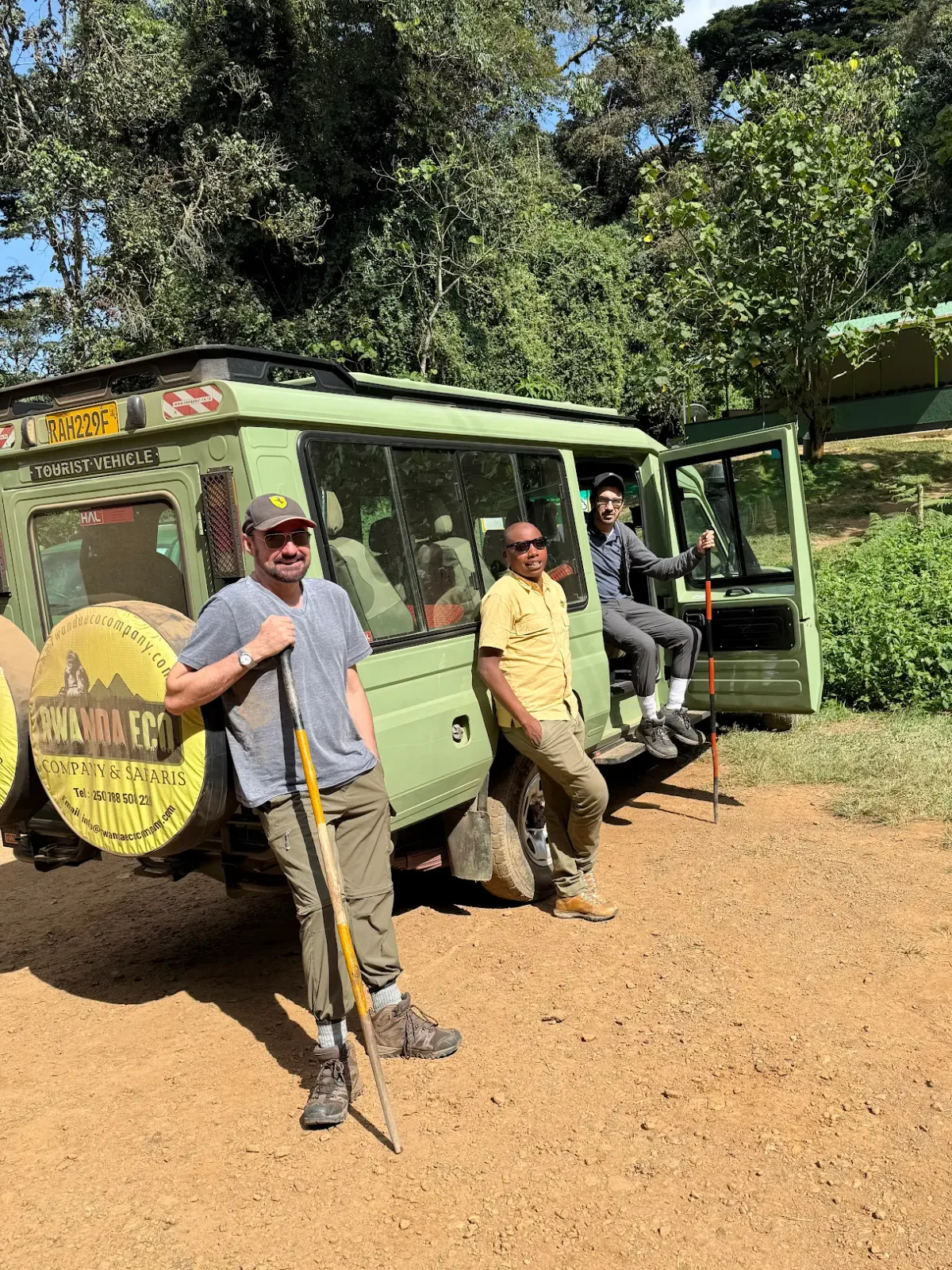
Ask who owns the 4x4 and who employs the driver-guide. The operators with the best trek-day record are the ones whose guide has driven the Kinigi road a hundred times, knows the rangers, and can ask for a gorilla family that suits your fitness. That relationship does not exist when the vehicle is hired per trip from a third party.
5. A written confirmation that names every lodge
“Luxury lodge in Volcanoes National Park” is not a confirmation. The document you receive before paying the balance should list each property by name, the room type, the board basis, every permit and park fee included, and the deposit and cancellation terms. If a lodge is later substituted, the written version is what you hold the operator to.
6. Reviews that match the license
Read reviews on TripAdvisor, Google, and SafariBookings, and check that the company name on the reviews is the same as the one on the license. Look for reviews that name the guide and the lodge; those are hard to fake. A new operator with 15 reviews is not a red flag. A company with hundreds of reviews under a different name than the one on its contract is.
What separates a good operator on trek day
The checklist tells you who is real. What separates the best operators from the merely licensed shows up at 7:00 am at the Kinigi park headquarters, where rangers assign each group of eight to one of the habituated gorilla families. Some families are a 45-minute walk from the trailhead; others are three hours up the volcano. A guide who knows the rangers and has read your group correctly will ask for the right family. A guide who does not will take whatever is left. The same is true of porters, of having the vehicle moved to the trailhead rather than the car park, and of the back-up plan if a flight into Kigali is delayed the night before a trek.
“Anyone can book a permit,” says Reginal Hakizimana, founder of Rwanda Eco Company and Safaris. “What you are paying an operator for is the morning at Kinigi, when the family gets assigned, and the afternoon when the plan has to change.”
Price: what the operator’s fee actually covers
The $1,500 gorilla permit is the same through any operator or directly from RDB; nobody marks it up. The operator’s price covers the vehicle and fuel, the driver-guide’s salary, lodge bookings, park fees other than the permit, and planning time. For a 3-day gorilla safari the total runs about $3,000 per person, meaning the operator’s share after permit and lodge is modest. Our gorilla trekking cost breakdown itemizes it. Operators that quote well below the market for the same lodges are usually either reselling and cutting corners on the vehicle or not including something the confirmation should list.
Local versus international: the honest answer
Booking directly with a Kigali-based operator is usually 15 to 25 percent cheaper for the same lodges, because there is no second margin, and the local company runs the trip either way. International agencies earn their fee when you are combining Rwanda with Kenya or Tanzania, want one contact for a three-week itinerary, or value a home-country consumer protection scheme. Both can be excellent. The one arrangement to avoid is paying an agency that itself cannot tell you which Rwandan operator holds your permit. We make the case for the local option in why book a local Rwanda tour operator.
Six questions to send before you pay
- What is your RDB license number?
- Will my gorilla permit be issued in my name, and can you send the RDB confirmation?
- Who owns the vehicle, and who employs the driver-guide?
- What happens if my flight into Kigali is delayed the night before the trek?
- What are the deposit, balance, and cancellation terms, in writing?
- Can you send a confirmation that names every lodge, room type, and included fee?
A good operator answers all six in one email. Rwanda Eco Company and Safaris is licensed by RDB, a member of RTTA, ASTA, ATTA, and USTOA, and holds a 5.0 rating from 238 TripAdvisor reviews. Send those six questions to info@rwandaecocompany.com, or read how booking gorilla trekking in Rwanda works first.
Frequently Asked Questions
How do I know if a Rwanda tour operator is legitimate? +
Check three things: an RDB tourism operating license (ask for the license number), membership of the Rwanda Tours and Travel Association (RTTA), and whether the gorilla permit will be issued in your name through RDB. A legitimate operator can show all three within a day. Reviews on TripAdvisor, Google, and SafariBookings should match the company name on the license.
Who are the best tour operators in Rwanda for gorilla trekking? +
The best operators are the RDB-licensed, Kigali-based companies that book permits directly, run their own vehicles and guides, and have several years of verifiable reviews. There are a few dozen that meet that bar. Rwanda Eco Company and Safaris is one of them, with a 5.0 TripAdvisor rating from 238 reviews and RTTA, ASTA, ATTA, and USTOA membership, but the checklist in this article will let you judge any operator, including us.
Is it better to book a Rwanda safari through a local operator or an international agency? +
A local operator usually costs less for the same lodges because there is no second margin, and it is the local company that actually runs your trip either way. International agencies add value when you are combining several countries or want a single point of contact across a long itinerary. In either case, ask who holds your gorilla permit and who your driver-guide works for.
How much deposit should a Rwanda tour operator ask for? +
Thirty percent is standard, with the balance due 30 to 60 days before travel. The gorilla permit portion ($1,500 per person) is often requested in full at booking because RDB charges the operator in full and the permit is non-refundable. Be cautious of an operator that asks for 100 percent of the trip price more than 60 days out.
What questions should I ask a Rwanda tour operator before booking? +
Ask for the RDB license number, whether the permit will be in your name, who owns the vehicle and employs the guide, what happens if your flight is delayed on trek day, what the deposit and cancellation terms are, and for a written confirmation listing every lodge by name. A good operator answers all six without hesitation.
Do Rwanda tour operators charge more than booking directly with RDB? +
The permit costs $1,500 whether RDB or the operator books it; operators do not mark it up. What an operator charges for is the vehicle, the driver-guide, the lodges, and the planning. Booking only the permit yourself still leaves you arranging transport to Kinigi for a 7:00 am briefing, which is why most travelers use an operator.
Updated October 14, 2026