
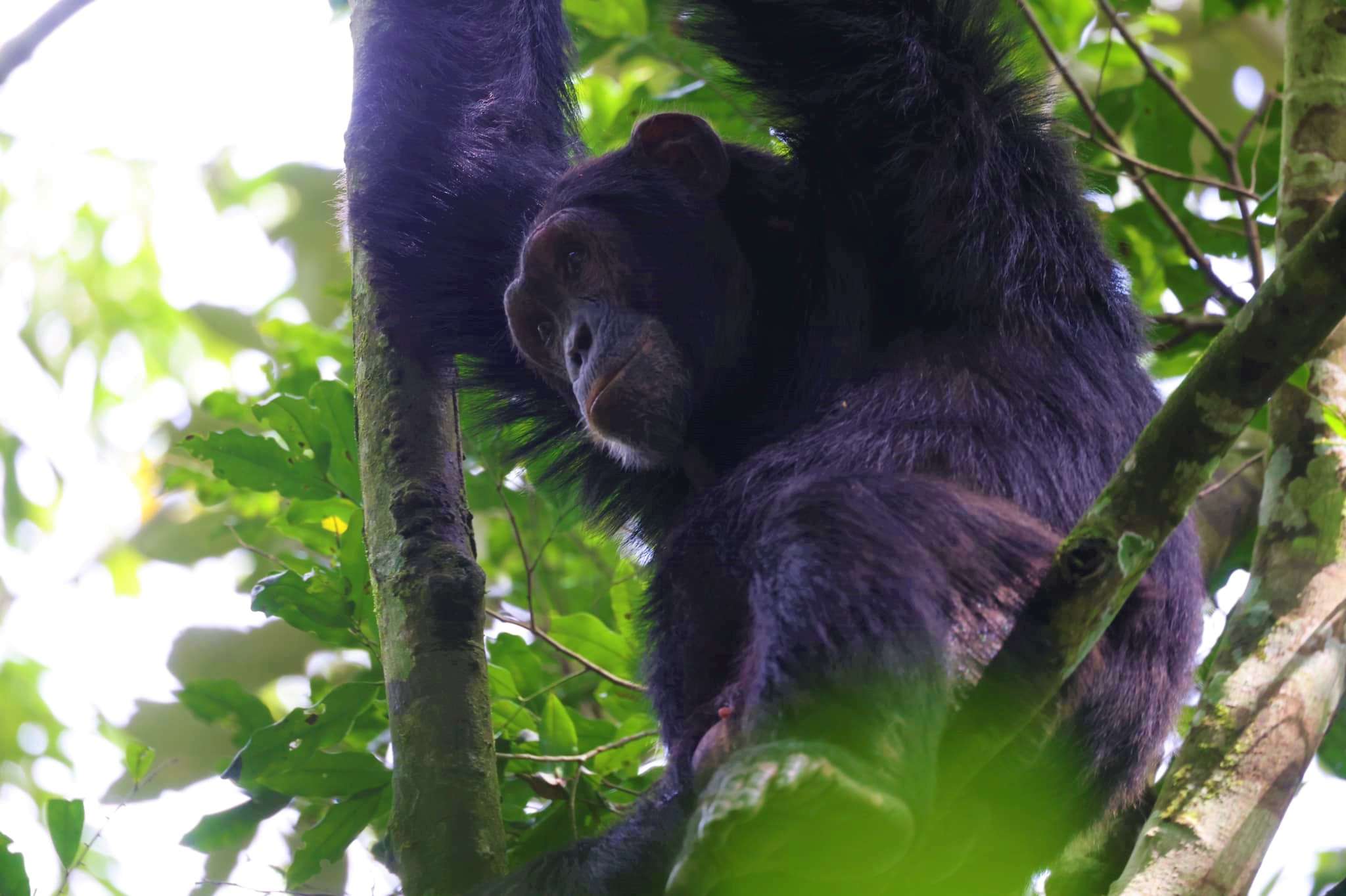
Chimpanzees are fascinating to watch, mostly because of how much their behaviour resembles ours as humans. They can communicate, they use tools, they maintain friendships and learn from one another, just like humans. At Rwanda Eco Company & Safaris, we arrange primate safaris across East Africa, including visits to Nyungwe National Park, Kibale Forest and other destinations where you can encounter chimpanzees in the wild. Chimpanzee trekking is one of the experiences we recommend to travellers visiting Rwanda and Uganda. Here are seven interesting facts about chimpanzees that you might find useful before your next primate safari.
1. Chimpanzees Share Approximately 98% of Their DNA with Humans
Chimpanzees are among our closest living relatives, sharing approximately 98% of their DNA with humans. Their intelligence, social relationships and ability to learn have made them important subjects of scientific research. When you go chimpanzee trekking in Rwanda’s Nyungwe National Park or Uganda’s Kibale Forest, you may notice behaviours that seem surprisingly familiar, from grooming one another to caring for their young.
2. Chimpanzees Use Tools
Chimpanzees are very clever problem solvers and have been seen using sticks to collect termites, stones to crack nuts and leaves to gather water. They usually learn these skills by watching other chimpanzees. Young chimps spend years observing their mothers and other members of the community, picking up the skills they need to survive. You may not see tool use during a chimpanzee trek in Rwanda or Uganda, but it is one of the behaviours that makes both them and gorillas so interesting to study.
You can read about Trekking Chimpanzees in Rwanda Vs Uganda
3. Chimpanzees Have Complicated Social Lives
Chimpanzees live in communities that can include dozens or even more than 100 individuals. However, they rarely spend the entire day together as one group. They split into smaller groups and reunite later, depending on food availability and social activities. In their gropus, they groom one another, play, form friendships and sometimes compete for dominance.
This is part of what makes chimpanzee trekking in Uganda’s Kibale Forest and Rwanda’s Nyungwe National Park so interesting. You are observing animals with relationships and social structures that have developed over many years.
4. They Build New Sleeping Nests Every Night
Chimpanzees do not sleep in the same nest every night, they build new ones using branches and leaves, usually high in the trees. In forests such as Nyungwe in Rwanda and Budongo in Uganda, guides and researchers sometimes identify chimpanzee nests while tracking the animals through the forest.
Read about the best Chimpanzee Trekking Locations in Nyungwe National Park
5. Chimpanzees Have Their Own Ways of Communicating
Chimpanzees communicate through sounds, gestures, facial expressions and body movements. One of their most recognisable calls is the pant hoot, a loud vocalisation that can carry through the forest. You may hear chimpanzees calling to one another before you actually see them.
6. Chimpanzees Eat More Than Just Fruit
Fruit is an important part of a chimpanzee’s diet, but these primates also eat leaves, seeds, flowers, insects and occasionally meat. Their diet changes depending on the season and what is available in the forest. Some chimpanzees even hunt smaller animals, including other primates, and share their food with members of their community. This varied diet is one of the interesting facts about chimpanzees that shows how adaptable they are to their forest environment. The forests of Rwanda and Uganda provide a wide variety of food, making them important habitats for these primates.
7. Rwanda and Uganda Are Excellent Destinations for Chimpanzee Trekking
If you are hoping to see chimpanzees in the wild, Rwanda and Uganda are both worth considering. In Rwanda, chimpanzee trekking takes place mainly in Nyungwe National Park, where you can explore one of Africa’s oldest rainforests. Uganda offers several trekking destinations, including Kibale National Park, Budongo Forest and Kyambura Gorge in Queen Elizabeth National Park.
At Rwanda Eco Company & Safaris, we can arrange chimpanzee trekking in either country or combine it with mountain gorilla trekking and other wildlife experiences.
Contact us to begin planning your East Africa Safari Experience
Frequently Asked Questions
Where can you see chimpanzees in Rwanda and Uganda? +
You can track chimpanzees in Nyungwe National Park in Rwanda and Kibale National Park, Budongo Forest and Kyambura Gorge in Uganda.
When is the best time for chimpanzee trekking? +
Chimpanzee trekking is available throughout the year, although the drier months generally offer more manageable forest conditions.
Is chimpanzee trekking difficult? +
It can be physically demanding, as you may need to walk through dense vegetation, muddy trails and uneven forest terrain.
Can you combine chimpanzee trekking with gorilla trekking? +
Yes, you can combine chimpanzee trekking in Rwanda or Uganda with mountain gorilla trekking in Volcanoes National Park or Bwindi Impenetrable National Park.